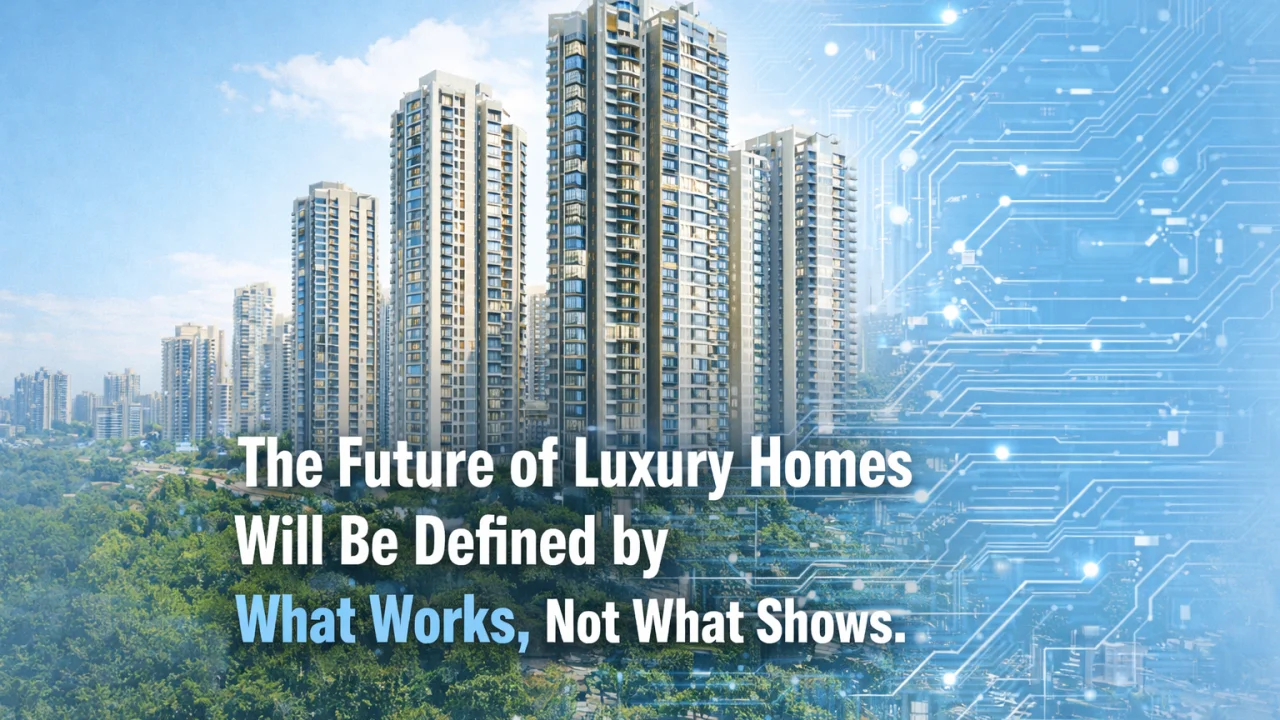
For decades, luxury in residential real estate has been defined by surface cues. Imported finishes. Designer names. Lifestyle branding borrowed from fashion, hospitality, or art. While these associations have their place, they often operate at the level of aspiration rather than impact.
The homes of the future will be defined by something far more fundamental. How well they support everyday life.
As cities densify, climates become more volatile, and digital lives blend seamlessly with physical spaces, the definition of a good home is changing. It is no longer just about how a space looks. It is about how it works. Quietly, reliably, and intelligently.
That is why technology is no longer a feature in residential living. It is becoming an essential.
At its best, residential technology does not announce itself. It does not demand attention. It operates in the background, improving health, safety, efficiency, and ease without adding friction to daily life.
Energy efficiency and management sit at the heart of this shift. Homes today must respond intelligently to usage patterns, peak loads, and sustainability goals. Smart energy systems that optimise consumption, reduce waste, and provide real-time visibility are no longer indulgences. They are necessary for both environmental responsibility and long-term cost control. For residents, this means homes that are conscious of how energy is used, not just how it is billed.
Air quality is another area where expectations are evolving rapidly. Indoor air quality has a direct and measurable impact on health, focus, and well-being. Smart systems that monitor, regulate, and improve air quality are becoming as important as ventilation once was. Homes that actively manage what residents breathe offer a quieter but far more meaningful form of luxury. One that supports wellness every single day.
Security, too, has moved beyond locks and cameras. The future lies in integrated, AI-enabled systems that protect both individual apartments and shared condominium spaces. From intelligent access control to proactive surveillance systems, technology can significantly raise the baseline of safety. When done well, it creates reassurance without intrusion. Residents feel protected, not monitored.
Equally important is how seamlessly all of this comes together. The real promise of smart living lies in integration. When lighting, switches, appliances, energy systems, and security are connected through intuitive mobile interfaces, complexity disappears. The home responds to the resident, not the other way around. Internet of Things integration across switches, lighting, and appliances enables people to manage their homes with ease, whether they are in the home or miles away.
This is where thoughtful partnerships matter.
Technology-led collaborations between real estate developers and global technology leaders represent a far more meaningful evolution of branded residences. While fashion and lifestyle associations may elevate perception, it is these partnerships that tangibly improve lives. They shape how residents experience their homes every day, not just how the homes are marketed.
The collaboration between Hero Realty and Panasonic at The Palatial Japanese Edition reflects this shift. It brings together two organisations with deep competence in their respective domains. One understands how people live, aspire, and invest in homes. The other understands how technology can be applied thoughtfully to improve health, safety, efficiency, and convenience.
What makes such partnerships important is intent. The intent is to embed intelligence into the infrastructure of living, rather than layering it on as an afterthought. The intent is to prioritise everyday outcomes over symbolic associations. The intent is to raise the standard of living in ways that are felt long after novelty wears off.
As an industry, we must begin to champion this approach more deliberately. The future of residential living will not be defined by logos on lobbies or names on brochures. It will be defined by homes that are energy-aware, health-supportive, secure by design, and effortless to live in.
Technology, when applied with restraint and purpose, becomes invisible. And when it becomes invisible, it becomes indispensable.
Because the homes that will truly endure are not the ones that impress at first glance, but the ones that quietly work every single day. And that is where the future of residential living is already being built.