As published in BW Marketing World
Consumers have never been easier to reach.
They have also rarely been harder to convince.
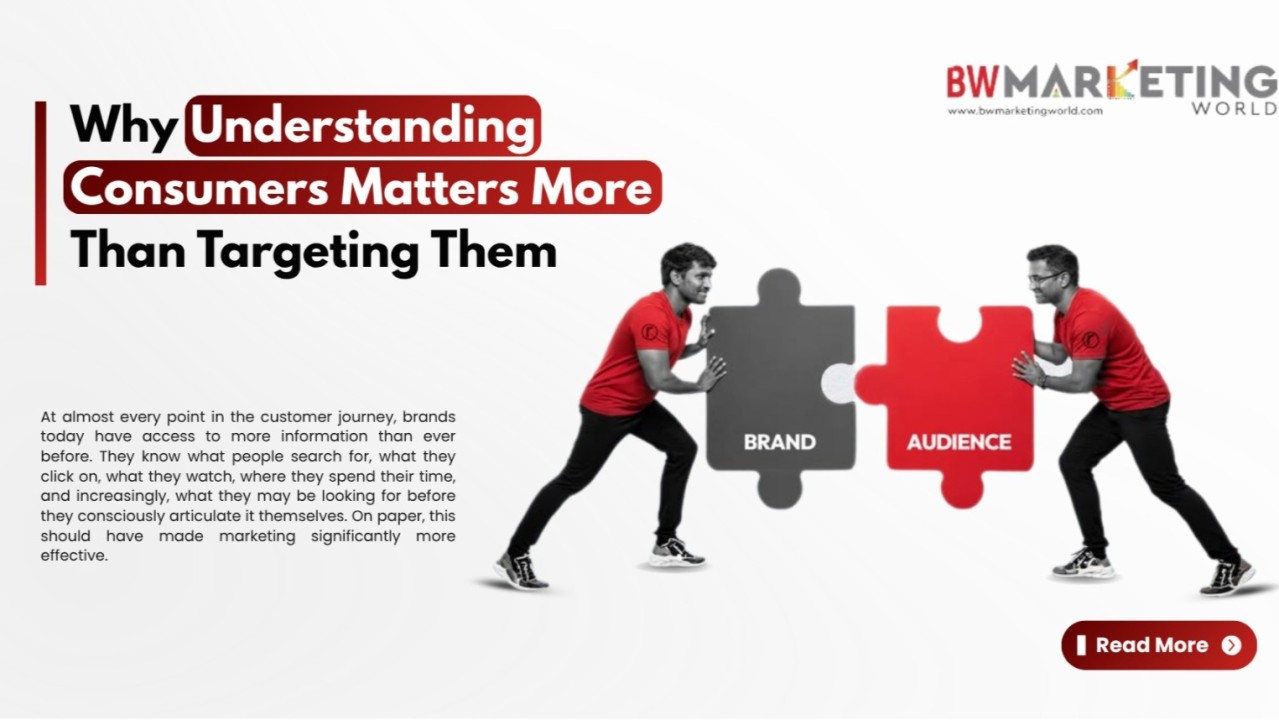
At almost every point in the customer journey, brands today have access to more information than ever before. They know what people search for, what they click on, what they watch, where they spend their time, and increasingly, what they may be looking for before they consciously articulate it themselves. On paper, this should have made marketing significantly more effective.
Yet something interesting has happened.
As brands have become better at reaching consumers, consumers have become better at resisting them. Not because people dislike brands. Not because they reject advertising. But because they have become increasingly sensitive to the difference between being persuaded and being understood.
That distinction is shaping the future of marketing more than many brands realize.
For years, marketing was built on a relatively straightforward premise: understand consumer behavior, identify opportunities to influence decisions, and communicate the right message at the right time. Technology amplified that capability. Data became richer. Targeting became sharper. Personalization became more sophisticated.
Yet alongside these advances, consumers were learning too.
Particularly Millennials and Gen Z.
These generations grew up inside the digital ecosystem. They understand how recommendation engines work. They understand how platforms monetize attention. They understand that much of what appears organic has often been carefully engineered. As a result, they have developed a remarkably refined ability to detect when communication feels genuine and when it feels manufactured.
The issue is not that consumers object to relevance. The issue is that they increasingly question intent.
When a brand suddenly appears in every cultural conversation, consumers notice. When a campaign adopts a social cause that feels disconnected from the organization’s behavior, consumers notice. When personalization feels less like relevance and more like intrusion, consumers notice.
And once trust begins to erode, persuasion becomes significantly harder.
Trust has quietly become one of the most valuable currencies in modern marketing. Not because consumers expect perfection from brands. But because they expect authenticity. They expect consistency. They expect a degree of self-awareness. Most importantly, they expect brands to understand the context within which their decisions are being made.
This is where many organizations continue to underestimate what consumers are really looking for.
The assumption often remains that better targeting will solve the problem. More data. More segmentation. More precision.
Yet the challenge facing brands today is rarely a lack of information. It is a lack of understanding.
Information tells us what people are doing. Understanding helps us appreciate why they are doing it. And that difference matters.
A first-time homebuyer is not merely looking for a two-bedroom apartment. A young professional is not merely searching for a shorter commute. A growing family is not simply evaluating amenities. Beneath every visible decision sits a set of aspirations, anxieties, hopes, trade-offs, and life transitions that rarely appear in a dashboard.
People do not make decisions in isolation from their lives. They make decisions through the lens of the life they are trying to create.
What has changed is not simply consumer behavior. It is consumer identity.
Earlier generations often accepted a relatively passive relationship with brands. Brands spoke. Consumers listened. Brands positioned. Consumers responded.
Today’s consumers increasingly see themselves differently. They expect participation. They expect dialogue. They expect brands to earn attention rather than assume it. They are less willing to outsource judgment and more likely to evaluate intent. They do not simply ask whether a product is relevant. They ask whether the brand understands the context within which that relevance exists.
This has profound implications for marketers.
It means understanding can no longer be delegated solely to data. Cultural listening becomes as important as analytics. Context becomes as important as targeting. Curiosity becomes as important as creativity.
The brands most likely to succeed may not be those with the largest data sets, but those most capable of translating information into human understanding.
This is why emotional intelligence is becoming increasingly important in marketing.
The brands that appear to resonate most deeply today are often those that demonstrate an understanding of human context. They understand what matters culturally. They understand the realities consumers are navigating. They understand the emotional landscape surrounding a decision. And they communicate in ways that acknowledge those realities rather than simply attempting to influence behavior.
Consumers do not experience understanding as a marketing tactic. They experience it as respect.
This is particularly evident among younger consumers.
Contrary to popular belief, they are not looking for brands to entertain them endlessly or participate in every trend. They are looking for brands that feel relevant without trying too hard to be relevant. Brands that understand their values without appropriating them. Brands that contribute meaningfully to their lives without constantly demanding attention.
In many ways, the future of marketing may involve becoming less obsessed with persuasion and more committed to understanding. Less focused on speaking. More focused on listening. Less concerned with what brands want to say. More curious about what consumers are actually experiencing.
Technology will continue to evolve. Artificial intelligence will make targeting more sophisticated, personalization more precise, and communication more efficient.
Yet the brands that create enduring trust are unlikely to be remembered because they know the most about consumers. They will be remembered because consumers felt understood by them.
Because people rarely resist understanding. They resist persuasion that arrives before understanding has earned the right to exist.
And in a world overflowing with messages, perhaps the future belongs not to the brands that know the most about consumers, but to those that make consumers feel understood the most.